



Neurological Rehabilitation Gold Coast: How Physio Supports Walking After Stroke
After a stroke, changes in strength, balance, coordination and confidence can make walking feel difficult or unsafe. A personalised neurological rehabilitation Gold Coast program can help a person practise the movements needed for standing, stepping and everyday mobility. At Elanora Physiotherapy, neurological physiotherapy Gold Coast care is tailored to the individual’s current abilities, goals and stage of recovery.
What Is Neurological Rehabilitation Gold Coast Care After a Stroke?
Neurological rehabilitation is a structured approach that helps people regain, adapt or improve skills affected by a stroke. Because every stroke affects the brain and body differently, rehabilitation is not a standard exercise routine. It begins with an assessment of movement, sitting, standing, balance, walking and daily function.
Healthdirect explains that stroke rehabilitation helps the brain adapt to injury and relearn affected skills. Physiotherapists are a key part of the rehabilitation team, working with patients on step-by-step goals for movement and mobility.
For people seeking neurological rehabilitation Gold Coast services, treatment may focus on getting out of a chair, transferring safely, taking more controlled steps, using a mobility aid or building endurance for community walking. The plan should be practical, measurable and relevant to daily life.
How Can a Stroke Affect Walking?
A stroke may affect the areas of the brain that control movement, sensation, balance and coordination. As a result, one person may experience weakness on one side, while another may have stiffness, reduced foot clearance, poor timing or difficulty judging where the body is in space.
The Stroke Foundation notes that stroke can affect sitting, moving, balancing, standing and walking. Common mobility challenges include weakness, paralysis, coordination difficulties, altered muscle tone, reduced sensation, fatigue, pain and poor balance.
These changes can lead to slower walking, shorter steps, uneven weight bearing or a higher risk of tripping. Therefore, neurological rehabilitation Gold Coast treatment should address the reason walking is difficult rather than simply asking the person to walk more.
How Does Neurological Rehabilitation Gold Coast Support Walking?
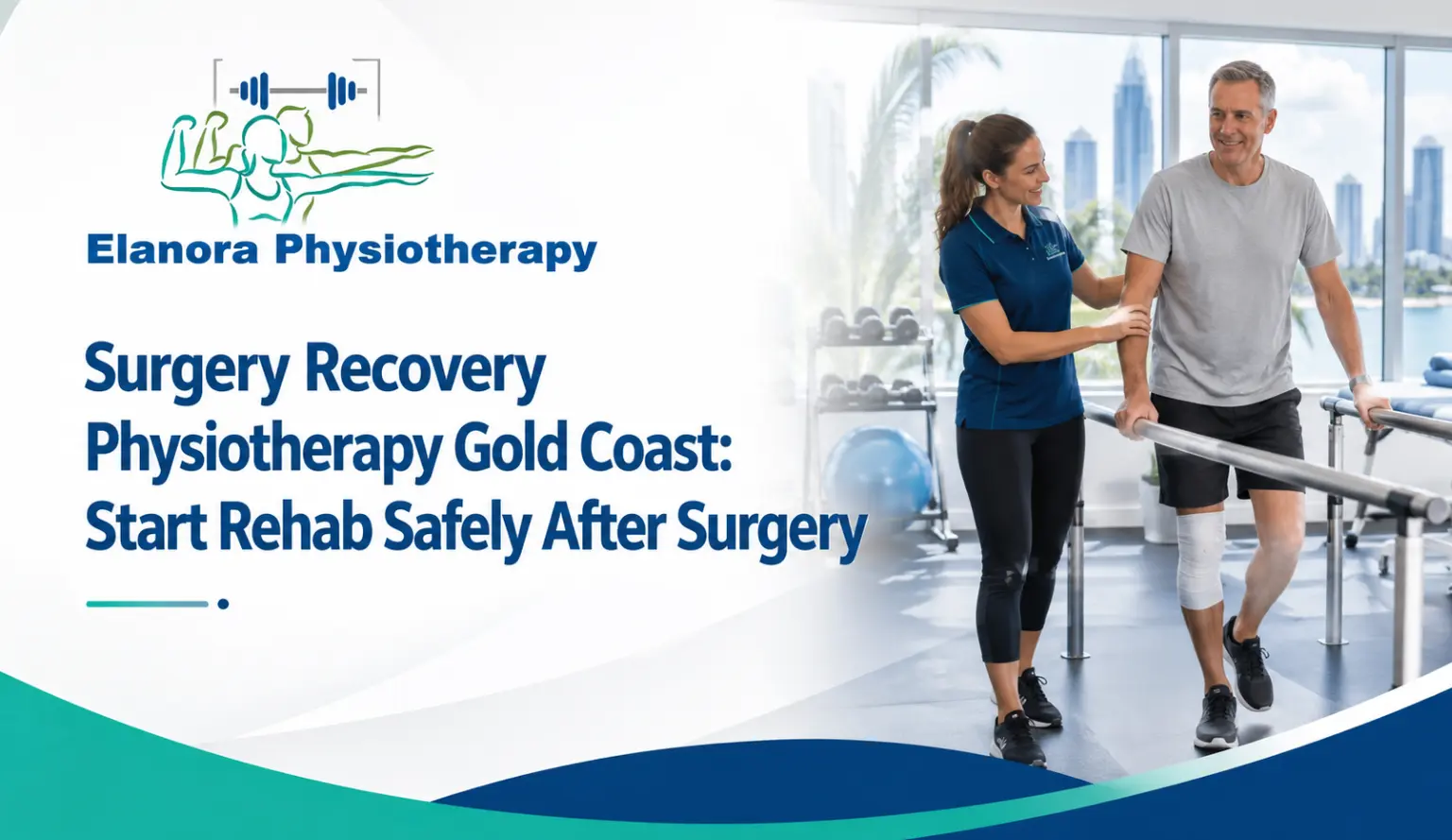
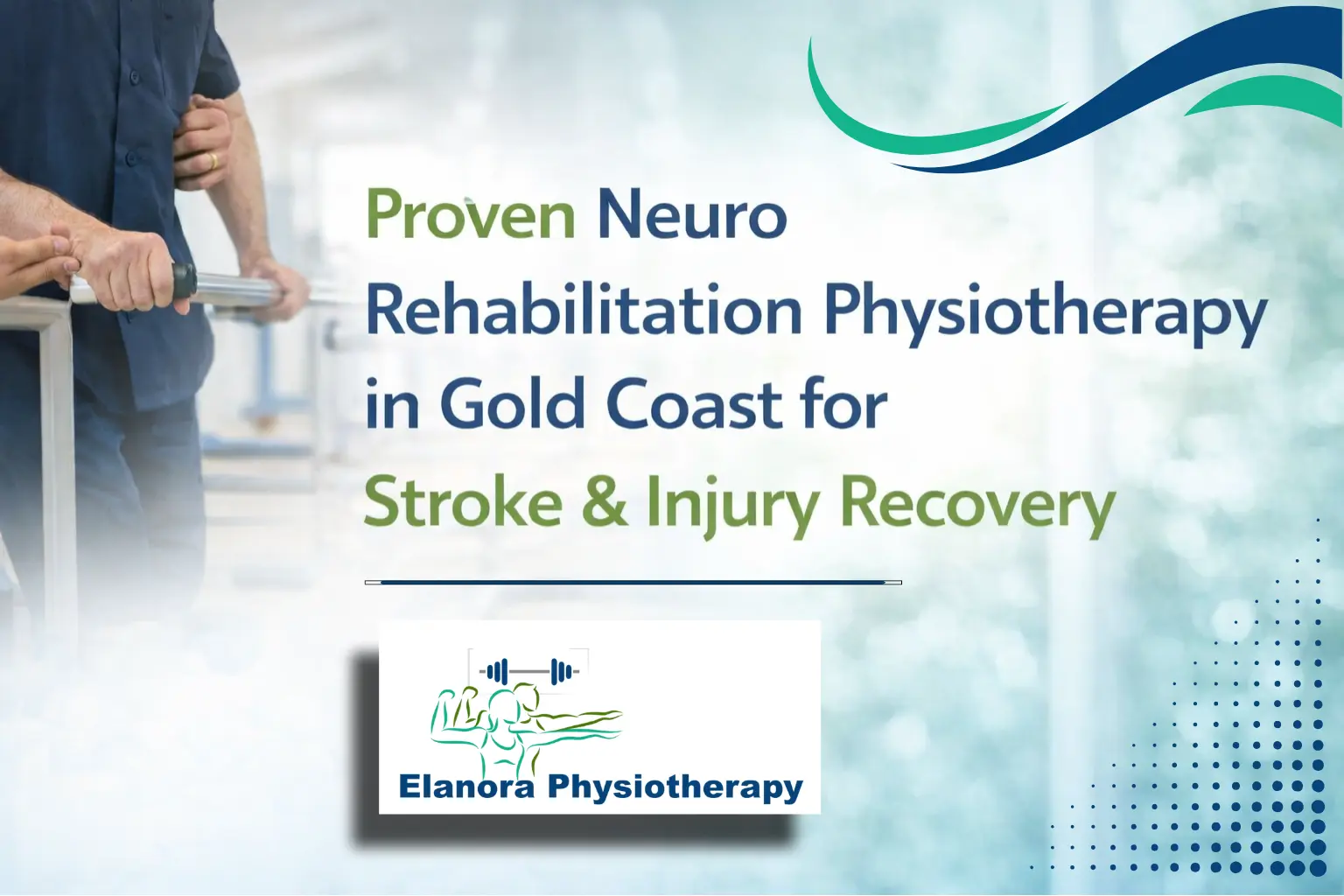
Physiotherapy supports walking by breaking the task into manageable components and practising them safely. A neurological physiotherapist may assess leg strength, trunk control, balance reactions, joint movement, foot position, step quality, walking speed and fatigue.
A neurological rehabilitation Gold Coast program may include the following treatment areas.
Task-Specific Walking Practice
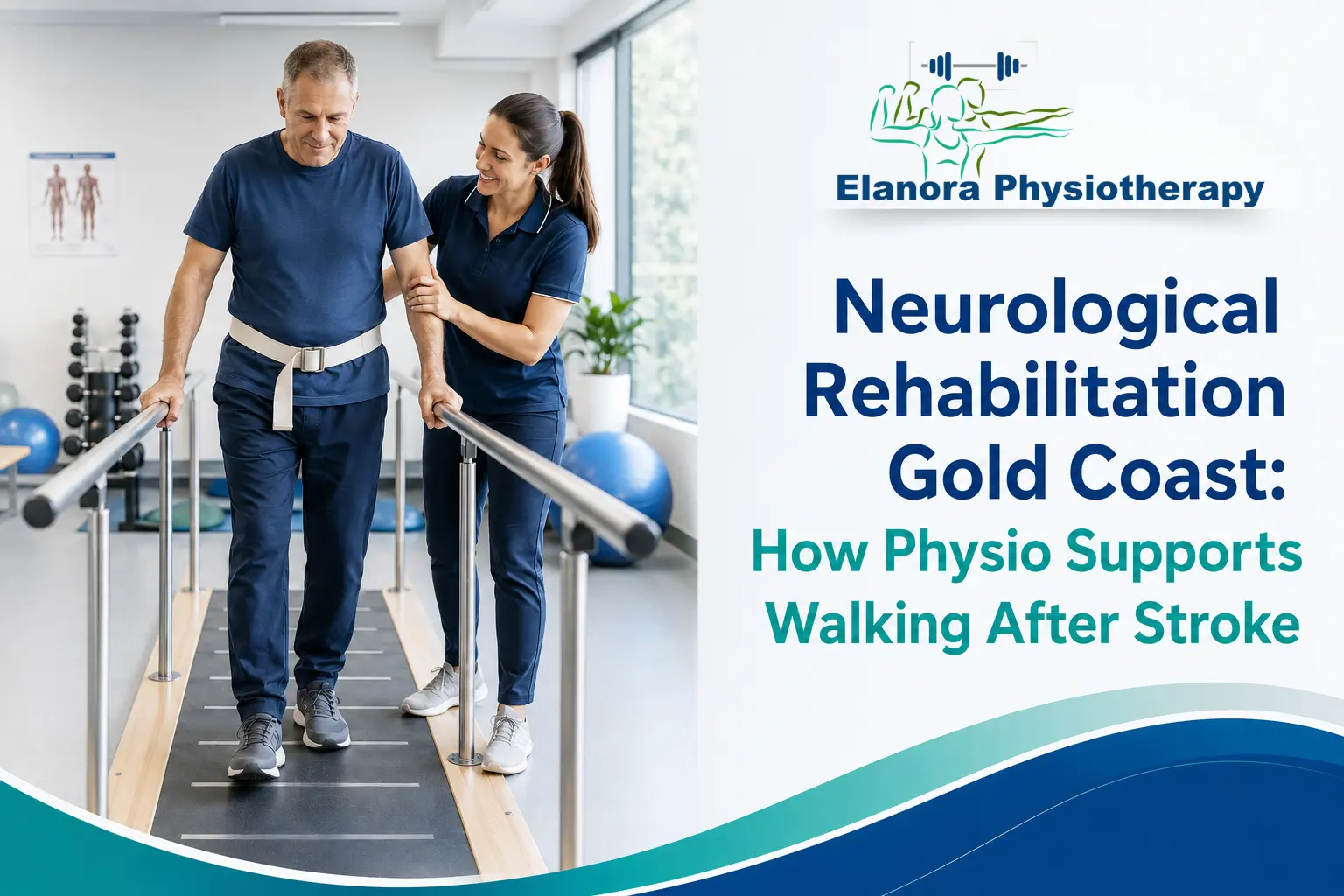
Walking improves through meaningful, repeated practice. Sessions may involve stepping, changing direction, walking over different surfaces, negotiating obstacles or practising movements needed at home.
The Stroke Foundation identifies task-specific activity and repetition as important parts of mobility rehabilitation after stroke.
Rather than completing exercises without a clear purpose, task-specific rehabilitation connects each activity to a functional goal. For example, stepping practice may help someone move around the kitchen, walk to the bathroom or access the garden more safely.
Strength and Movement Retraining
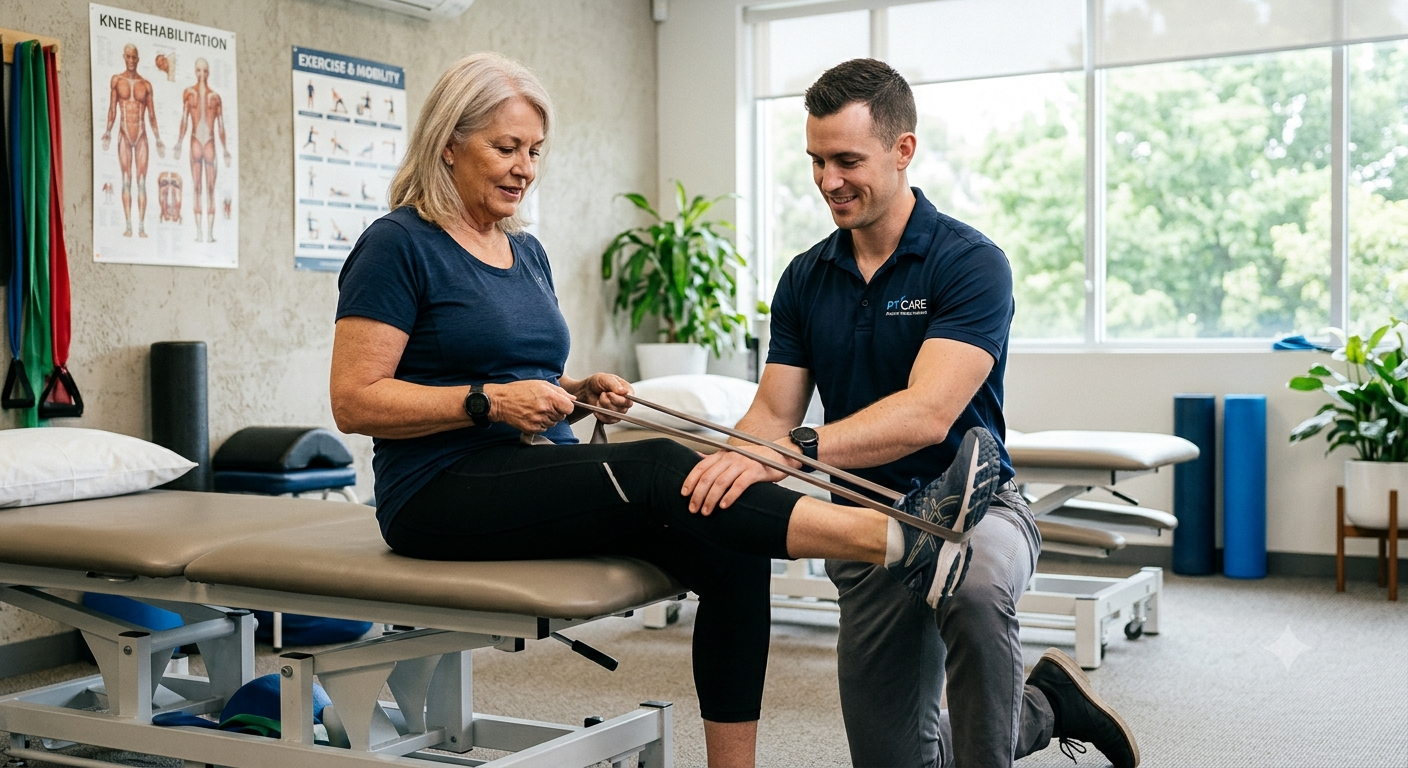
Weakness in the hip, knee, ankle or trunk can affect stability and step control. Targeted exercises may be used to improve the strength and movement required for standing up, maintaining posture, shifting weight and moving the leg forwards.
Exercises are selected according to the person’s ability. Some people may begin with supported sitting or standing, while others may practise more challenging movements such as step-ups, controlled reaching or walking for longer distances.
Balance and Falls-Risk Training
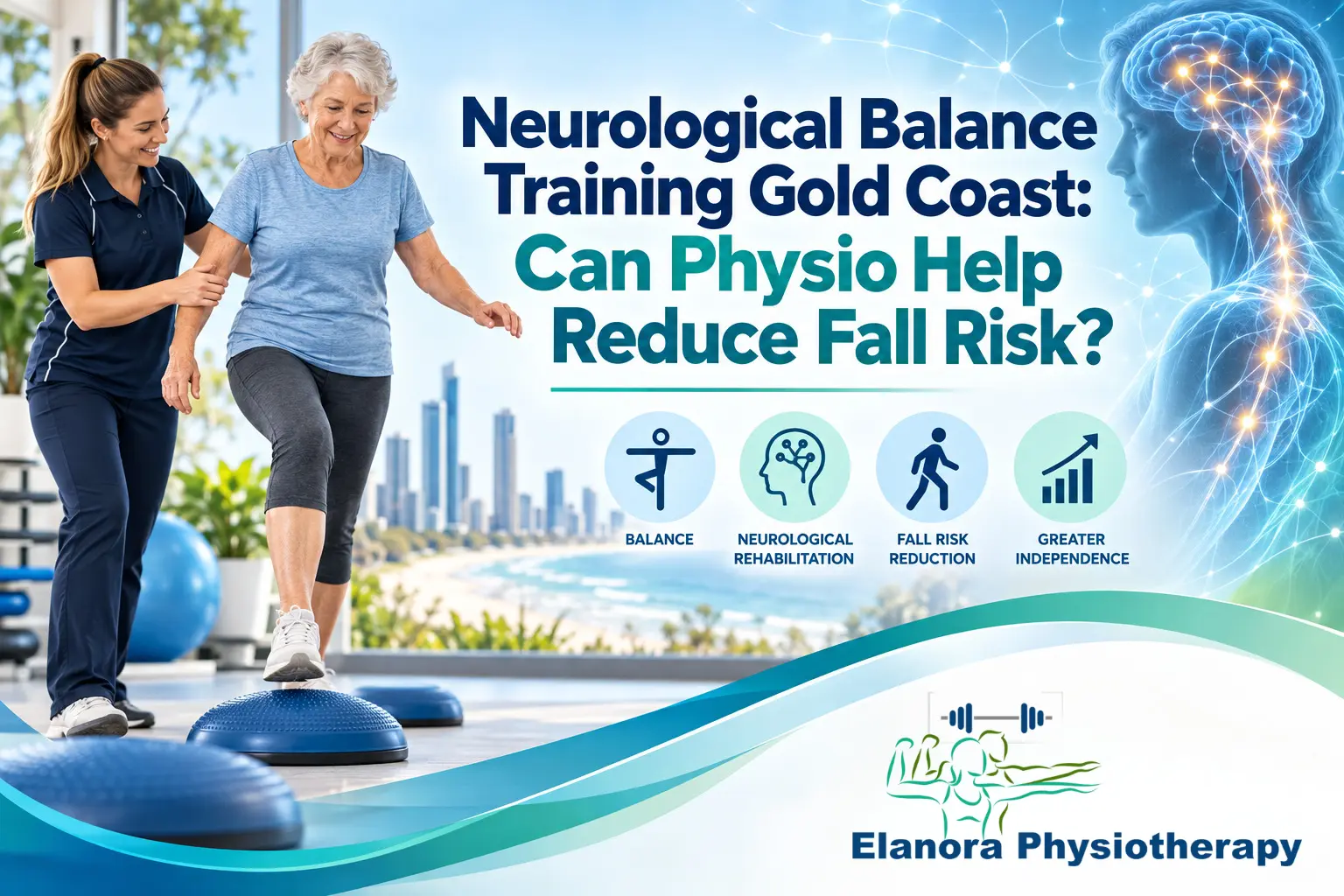
Balance training may include controlled weight shifts, reaching, turning and responding to changes in position. The aim is not only to improve test results but also to help the person feel safer during everyday activities.
Falls-risk training may also consider footwear, obstacles, turning technique, fatigue, reduced sensation and the home environment. Addressing these factors can make walking practice more relevant to real life.
Gait Training and Mobility-Aid Advice
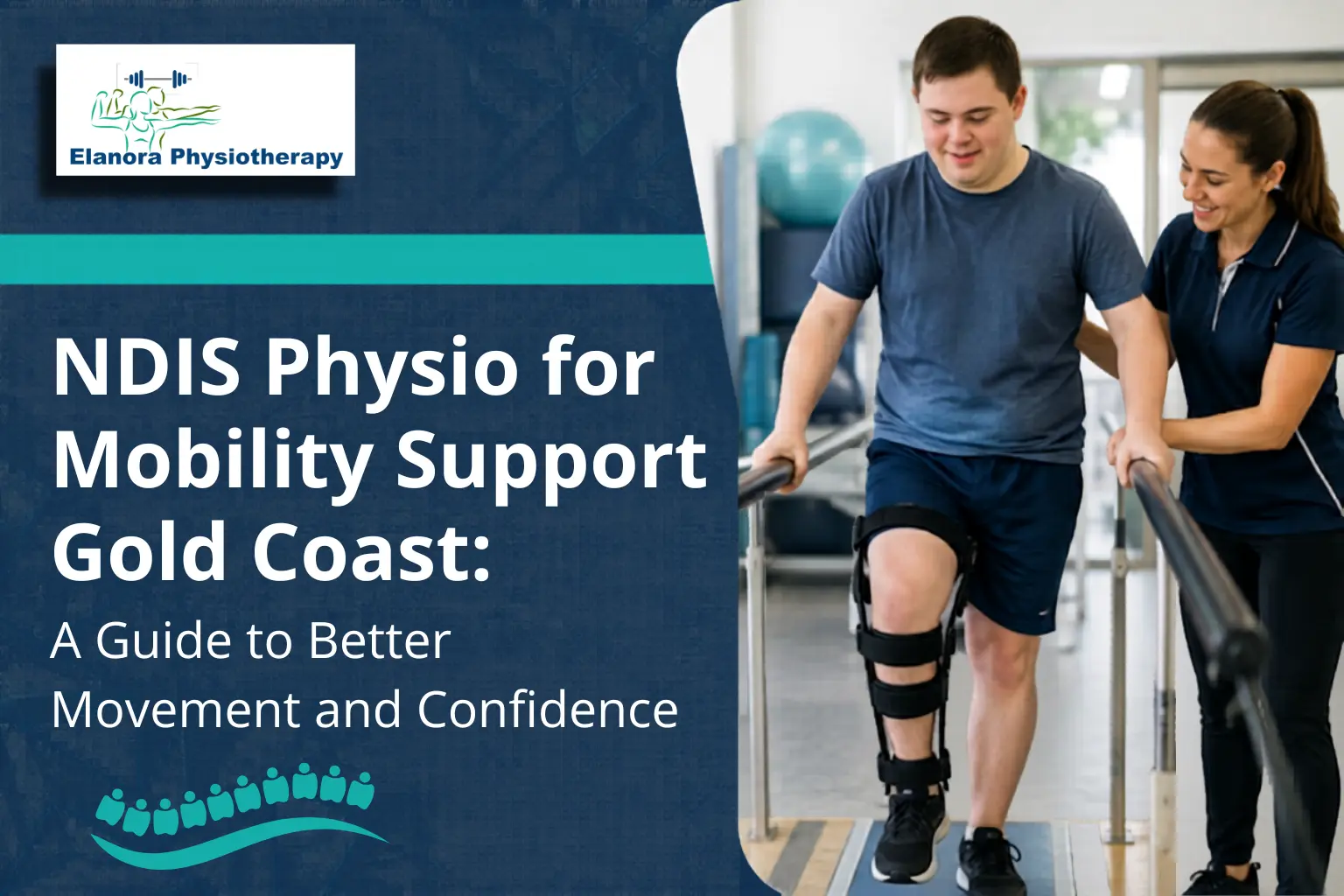
Gait training focuses on the quality, safety and efficiency of walking. It may address step length, foot placement, walking speed, posture and the ability to clear the affected foot.
Where appropriate, a physiotherapist may also assess whether a walking stick, frame or another mobility aid could make movement safer. Healthdirect advises that health professionals can assess mobility needs and recommend suitable aids.
Why Is Repetition Important in Neurological Rehabilitation Gold Coast?
The brain can adapt by forming and strengthening pathways as skills are practised. This capacity is commonly described as neuroplasticity. However, useful practice needs to be specific, safe and matched to the person’s ability.
In neurological rehabilitation Gold Coast programs, repetition may involve practising sit-to-stand transfers, stepping towards a target, controlling the affected leg or walking a short route several times. Quality matters alongside quantity.
Poorly selected practice may increase fatigue, reinforce compensation or reduce confidence. Consequently, a physiotherapist can adjust the task, level of assistance and number of repetitions as the person progresses.
This approach makes rehabilitation challenging enough to encourage improvement without ignoring safety, fatigue or recovery needs.
When Should Neurological Rehabilitation Gold Coast Begin?
Rehabilitation can begin in hospital when the treating team decides it is medically appropriate. It may then continue through inpatient rehabilitation, outpatient services, community programs, private physiotherapy or home-based care.
Healthdirect states that rehabilitation may start soon after stroke and continue for months, while further recovery may remain possible over a longer period.
Someone does not necessarily need to be newly discharged from hospital to benefit from an assessment. People may seek neurological rehabilitation Gold Coast care when they have ongoing walking limitations, reduced confidence, repeated falls, declining fitness or new functional goals.
The appropriate timing and frequency vary. Stroke severity, medical stability, fatigue, current mobility, home support and personal goals should all guide the rehabilitation plan.
What Happens During a Neurological Rehabilitation Gold Coast Assessment?
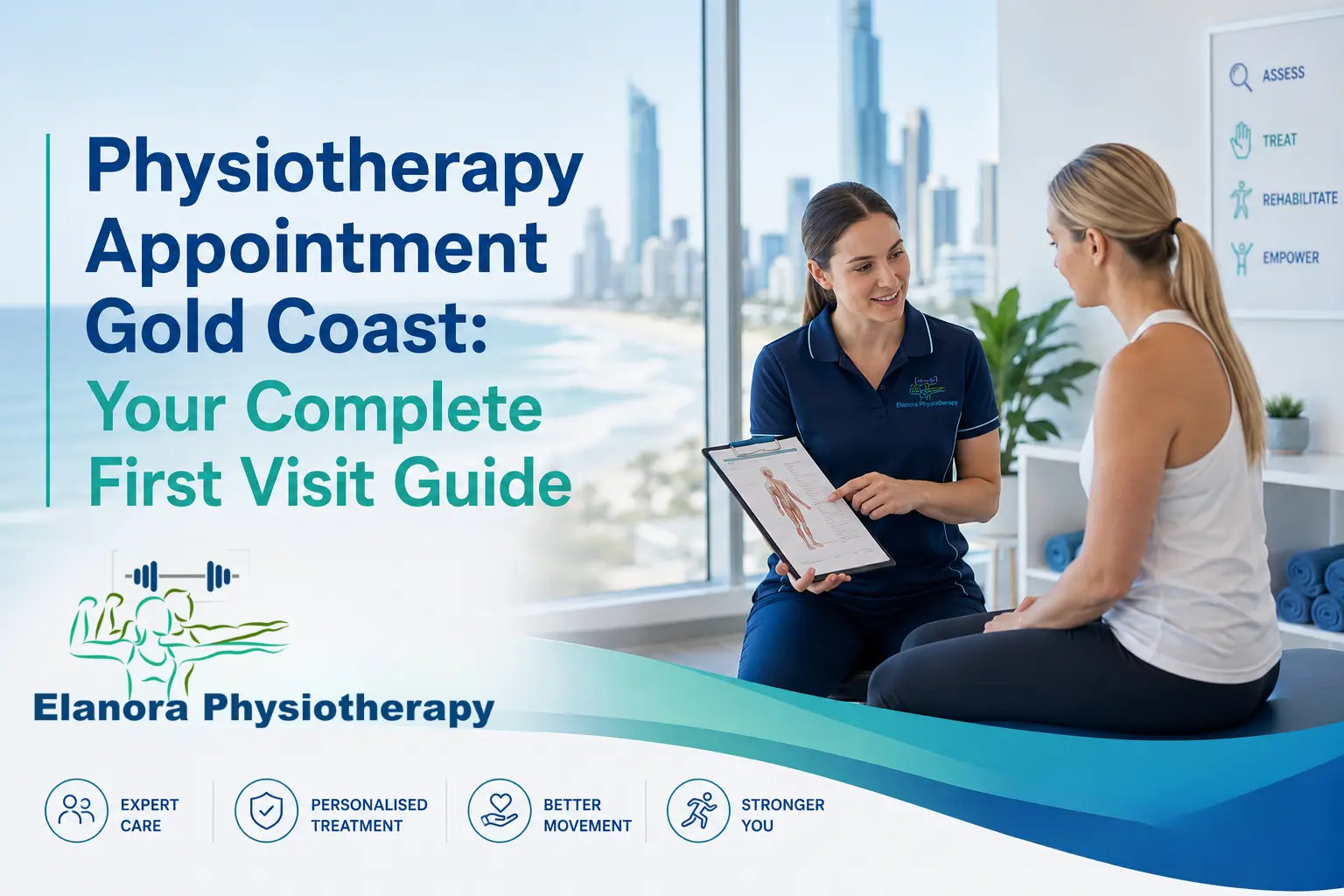
An initial assessment helps identify what is limiting walking and which goals matter most. The physiotherapist may ask about the stroke, hospital rehabilitation, falls, mobility aids, medications, fatigue and the person’s home environment.
The physical assessment may examine:
- Sitting and standing control
- Leg and trunk strength
- Joint movement and muscle tone
- Balance and coordination
- Transfers and stair ability
- Walking pattern, speed and endurance
- Confidence and falls risk
Using these findings, neurological rehabilitation Gold Coast treatment can be organised around clear functional goals. Examples may include walking to the bathroom more safely, moving around the home with less assistance, returning to local shops or increasing outdoor walking tolerance.
Progress should also be reviewed over time. This allows the physiotherapist to modify exercises, increase the challenge where appropriate and ensure the program remains relevant to the patient’s goals.
Can Neurological Rehabilitation Gold Coast Help Months or Years After Stroke?
Recovery is different for every person. The fastest changes often occur earlier after stroke, but improvement may remain possible later, particularly when rehabilitation addresses a specific limitation and the person can participate consistently.
Healthdirect notes that further recovery can occur beyond the first six months and may take years.
Therefore, neurological rehabilitation Gold Coast care should not be based only on how much time has passed. A current assessment can identify existing strengths, barriers, realistic goals and opportunities to improve safety, capacity or independence.
Physiotherapy cannot guarantee that every person will walk independently. Nevertheless, it may help improve selected components of mobility, such as standing tolerance, step control, balance, strength, fitness or confidence.
For someone who has stopped exercising or become less active over time, treatment may also focus on safely rebuilding physical capacity and confidence.
How Can Family Members and Carers Help?
Family members and carers can support consistency, confidence and safety. They may help organise appointments, encourage prescribed exercises, create a clear walking space or provide the level of assistance recommended by the rehabilitation team.
However, carers should not guess how to lift, transfer or physically support someone after stroke. Incorrect assistance can place both people at risk.
Healthdirect recommends involving patients, families and carers in rehabilitation decisions. It also notes that carer training can support daily activities and rehabilitation exercises.
A neurological rehabilitation Gold Coast plan can include practical education so that everyone understands the agreed goals, safe assistance techniques and signs that the program needs review.
Why Choose Local Stroke Rehabilitation in Elanora?
Choosing a local provider can make follow-up appointments and ongoing reviews easier for people living in Elanora and surrounding areas of the southern Gold Coast.
Elanora Physiotherapy provides personalised care for movement, balance, strength, coordination and functional rehabilitation from its clinic at The Pines Elanora Shopping Centre. Mobile physiotherapy is also available for suitable patients across the Gold Coast.
With neurological rehabilitation Gold Coast care, the aim is to create a practical pathway from assessment to meaningful movement goals. Treatment should be individualised, regularly reviewed and coordinated with other health professionals when required.
If you or a family member is looking for neurological rehabilitation Gold Coast support after a stroke, contact us to discuss an assessment and an appropriate rehabilitation plan. Our neurological physiotherapy Gold Coast service focuses on walking, balance, strength, coordination and everyday function, helping each patient work towards safer and more confident movement.